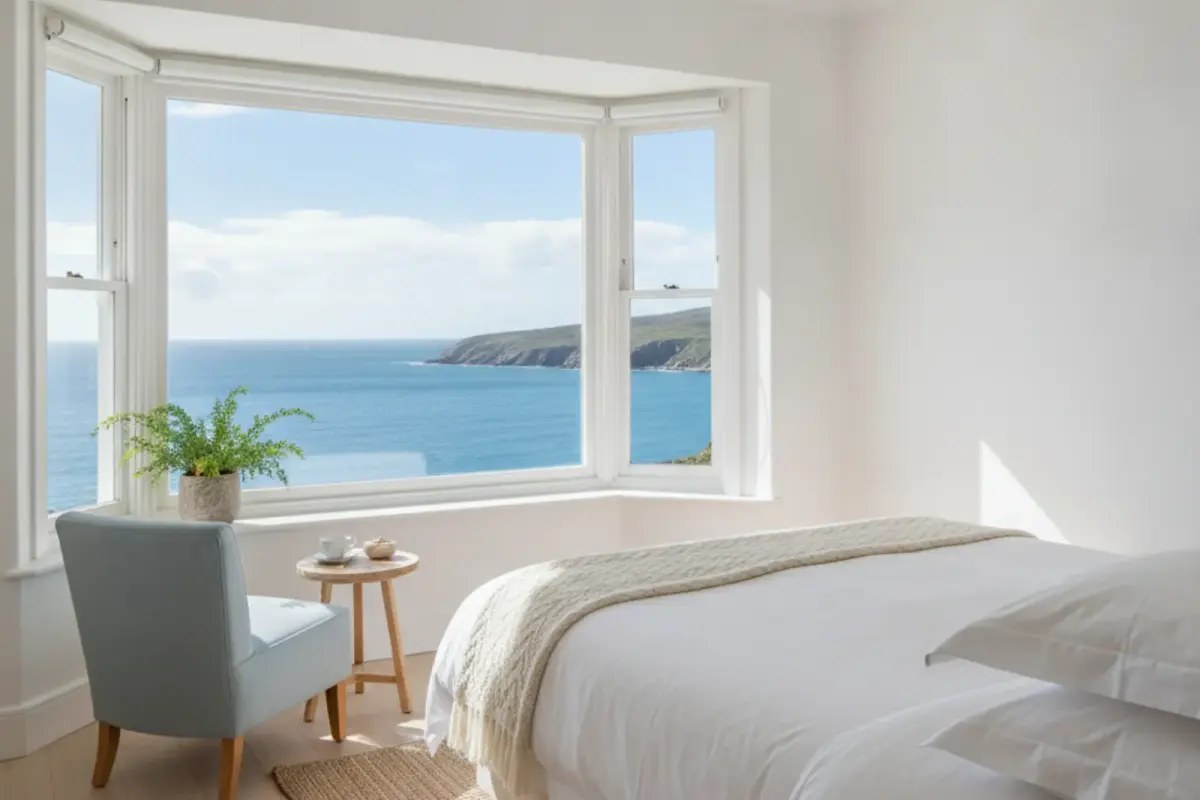
Brighton and Hove have a huge range of places to stay, from big seafront hotels on King's Road to small guesthouses in the squares of Kemp Town and Hove. Most rely on online travel agents for a large share of their bookings. That is often sensible: the platforms reach people who would never have found you otherwise.
The problem is the guests who already know your name. They search for it, see a booking platform's listing above or next to your website, click it, and you pay commission on a guest you had already won. Good SEO won't remove the platforms, but it can make sure your own site is the obvious choice for those searches, and give you a fair shot at the wider "where to stay in Brighton" market.
Step 1: Own your brand searches
Search your hotel's name on a phone, in a private window. What do you see? Ideally: your website at the top, your Google Business Profile on the right or in the map, and your booking link prominent. Often the reality is a platform listing first, a review site second, and your own site third.
To improve this:
- Make your homepage title and heading include your exact name and the area, for example "The Example Guesthouse, Kemp Town, Brighton".
- Add hotel structured data (the Hotel or LodgingBusiness schema type) with your name, address, star rating if you have an official one, amenities and check-in times.
- Link your Google Business Profile to your own site and set up the free booking links in your hotel profile so your direct rate appears alongside the platforms'.
- Make the direct booking path fast. Many hotel sites load a heavy booking engine before anything else. A slow site loses bookings even when it ranks.
Step 2: Give every room type a real page
A gallery and a single "rooms" page is not enough. Guests search for specifics: "sea view room Brighton", "family room Hove", "dog friendly hotel Brighton", "hotel with parking Brighton". Each room type deserves its own page, with:
- A clear description: size, bed type, view, bathroom, who it suits.
- Honest photos taken in good light.
- Accessibility details: stairs, lift, step-free access.
- What is included and what costs extra.
Platforms show every hotel in the same template. Your own site can say far more, and that detail is what persuades someone to book direct.
Step 3: Answer the questions guests actually ask
Look at your inbox and your reviews. The same questions come up again and again. In Brighton they tend to be about:
- Parking. City centre and seafront parking is limited and costly, and guests worry about it. A clear page on where to park, permit options and nearby car parks is useful and often ranks well.
- Getting there. Walking time from Brighton or Hove station, buses from the station, taxis.
- Noise. Is the street quiet? Are there bars nearby? Which rooms face the back?
- Events. Staying during Pride, the Marathon or the Festival: availability, minimum stays, what to expect.
- Dogs, children and accessibility. Many guests filter on these first.
Turn the best of these into short, useful pages or a well-organised FAQ. They help with search, reduce booking hesitation and save your team answering the same email again.
Step 4: Local guides that show you know the area
Guests choose Brighton for the seafront, the Lanes, the shopping, the music and the restaurants. A few well-written guides help you rank for broader searches and give visitors a reason to trust your recommendations. Good examples:
- Where to eat within a ten-minute walk of the hotel.
- A rainy-day guide to Brighton.
- A weekend itinerary for couples, or for families.
- Walks on the South Downs reachable by bus.
Write these yourselves, or with help, from real experience. Generic "top ten things to do in Brighton" lists are everywhere and rarely rank. Specific, opinionated, up-to-date guides do.
Step 5: Reviews everywhere, replies everywhere
Reviews on Google, TripAdvisor and the booking platforms all feed into how you appear. Ask happy guests to leave a Google review at checkout or in the follow-up email, and reply to reviews on every platform. Thoughtful replies to criticism reassure future guests more than a wall of five-star ratings.
Step 6: Links from places guests trust
Local event organisers, wedding venues, theatres, conference venues and attractions often keep lists of nearby accommodation. Being listed, with a link, helps both your search visibility and your direct bookings. If you sponsor or support local events or charities, make sure there is a link to your site.
Step 7: Track direct bookings, not just traffic
Set up conversion tracking in Google Analytics for completed bookings in your booking engine. Many engines support this, though it can take some configuration. Then you can see which pages and searches lead to direct bookings and invest accordingly.
Direct site versus booking platforms: what each does well
| Booking platforms | Your own site | |
|---|---|---|
| Reach | Huge, including people who have never heard of you | Mainly people already searching for you or your area |
| Cost per booking | Commission on every booking | Your website and SEO costs, spread over all bookings |
| Detail | Same template for every property | As much detail as you want about rooms, area and policies |
| Guest relationship | Platform holds much of the guest data | You hold it, and can welcome guests back directly |
| Best for | Filling rooms, reaching new markets | Repeat guests, branded searches, special requests |
The aim is a sensible balance, not cutting platforms off. Many small hotels use them for reach and work on SEO so that guests who already know the name book direct.
A quick audit you can do this week
- Search your hotel's name on a phone in a private window. Note what appears first, second and third.
- Open your own site on the same phone. Time how long it takes before you could press "Book".
- Check whether your Google Business Profile shows your own booking link and rate.
- Count your room pages. Is there one per room type, each with its own photos and details?
- Read your last 20 guest emails and list the questions. Are the answers on the site?
- Check your analytics for completed direct bookings. If you can't see them, fix the tracking first.
Each "no" is a fix to make. Most of them don't need a new website.
Mistakes we see on Brighton hotel sites
- Room pages that are just a photo carousel with no text, so Google has nothing to rank.
- The booking engine on a separate domain without cross-domain tracking, so every direct booking shows up as a referral from the booking engine.
- Old event pages ("Pride 2023") still ranking and showing out-of-date information.
- Different names across the web, for example "The Example" on the site and "Example Hotel Brighton" on the profile.
- Parking information buried in a PDF or missing altogether, despite being one of the first things guests ask about.
What results to expect
Fixing your brand search and booking path often has the fastest effect, because the demand already exists. Room pages, FAQs and guides build more slowly, over a few months. Most hotels will always use the platforms for some bookings; the aim is to stop paying for guests who were coming to you anyway.
We work with hotels, guesthouses and B&Bs across Brighton and Hove. If you would like a look at how your brand search appears today, get in touch, or read about our local SEO service.