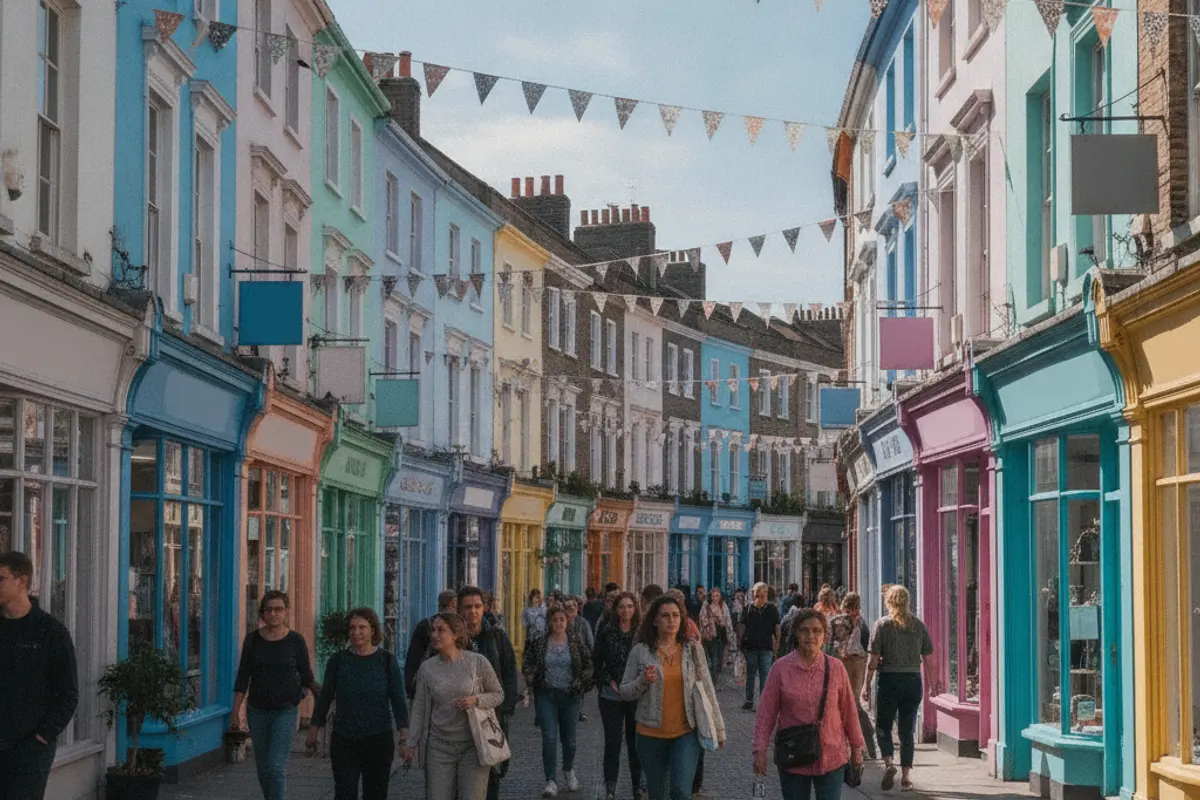
The most competitive patch in the city
Between Brighton station and the seafront you find North Laine, with several hundred independent shops, cafés and venues around Gardner Street, Kensington Gardens, Sydney Street and Bond Street; The Lanes, the narrow older alleys known for jewellers and boutiques; Churchill Square, the city’s largest shopping centre, on Western Road; and the Royal Pavilion and its gardens. Visitors pour through all of it, many searching on a phone as they walk. For a business here, competition is intense, but so is demand.
Three kinds of business, three kinds of search
Independents in North Laine and The Lanes. Vintage and clothing shops, record and book shops, jewellers, cafés, bars and restaurants. Most of their customers are close by and decide quickly. Searches are short (“brunch near me”, “vintage clothes Brighton”, “jeweller The Lanes”) and the map pack does most of the work.
Chains and larger retailers around Churchill Square and Western Road. They benefit from brand searches, so independents rarely beat them on generic terms. Independents win on specifics instead: particular brands, styles, repairs, made-to-order work and anything that ties to the street they are on.
Creative, digital and tech firms around the station. Studios, agencies, software companies and start-ups whose customers are often outside Brighton entirely. They need search visibility for what they do, not where they are. This community took a knock when New England House, the council-owned workspace that held more than 100 small firms, closed after more than a thousand serious fire safety defects were found from late 2024. Many of those businesses had to move at short notice. The council is now exploring redevelopment of the site.
Culture on the doorstep
North Laine began as one of the open arable fields around old Brighton, and its grid of late Georgian and early Victorian terraces survives because residents opposed a planned elevated road through it; the council designated it a conservation area in 1977. Along New Road at its southern edge stand the Theatre Royal and the Brighton Dome complex, which includes the Concert Hall, the Corn Exchange and the Pavilion Theatre, with the Royal Pavilion in the gardens beside them. Performance nights mean a steady flow of searches for pre-theatre dinners, drinks and late opening. Restaurants and bars that publish clear, current menus and booking options, and that mention the venues they are near, are well placed to catch them.
Practical SEO for the city centre
For shops and hospitality, local SEO is the foundation: a correctly placed pin (more important than usual where shops sit metres apart), accurate opening hours, real photos, the right categories and a steady stream of reviews. Our guide to Google Business Profiles in Brighton covers the details. Seasonal peaks matter too: summer weekends, the Brighton Festival and Fringe in May, and the run-up to Christmas all change what people search for, as we explain in seasonal search in Brighton.
For independents with stock to sell, product and category pages that Google can read make a big difference, as does linking your shop and website together properly. That is the territory of ecommerce SEO.
For creative and tech firms, the job is different: content that explains your expertise, case studies with substance, and a technically sound site. More buyers now ask AI assistants for recommendations, so we also look at AI search visibility. Our posts on SEO for Brighton tech start-ups and SEO for creative studios go further.
Moved recently? Update your address everywhere it appears, including your profile, website, social accounts and directory listings, and redirect any old location pages. If you changed your website at the same time, our migration service protects your rankings through the move.
Common problems in the city centre
A few issues come up repeatedly with central Brighton businesses. Map pins placed on the wrong street, or on the back entrance, so walkers are sent the wrong way. Opening hours left unchanged over bank holidays and events. Duplicate profiles created by previous owners or by Google itself. Menus and price lists that exist only as images. And websites built for desktop that load slowly on a phone signal in a crowded street. None of these needs a big budget to fix, but together they cost city centre businesses a surprising number of visits.
Competition also means reviews matter more here than almost anywhere else in the city. A business with a few dozen recent, detailed reviews and thoughtful replies often wins the click over one with more reviews that are years old.
Where to start
Tell us what kind of business you run and where your customers come from, and we will suggest the few changes most likely to pay off first. See our case studies, or get in touch.