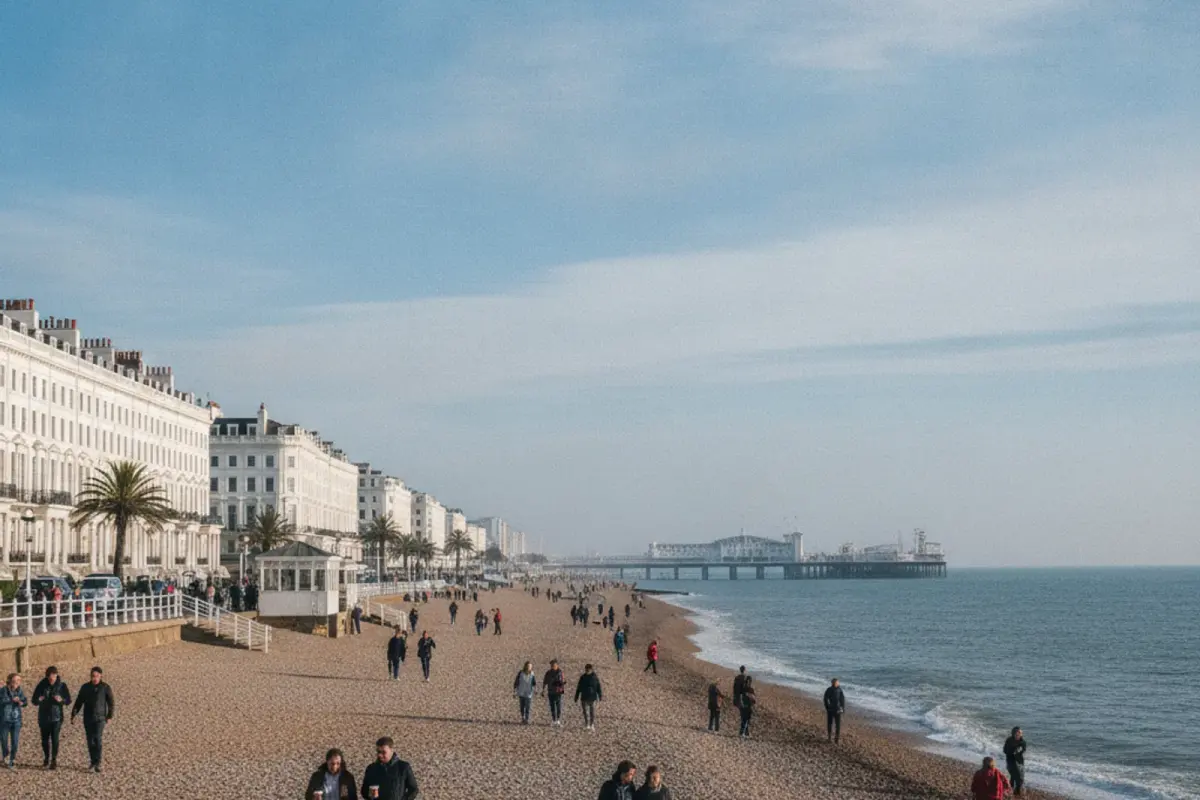
Few UK cities have a search pattern as seasonal as Brighton's. On a sunny Saturday in July, searches for seafront restaurants, beach bars, parking and things to do climb sharply. On a wet Tuesday in January they fall away, while searches for gyms, therapists, accountants and home improvements pick up. Overlay a packed events calendar and two universities, and you get a year of predictable peaks.
The good news is that predictable means plannable. Google takes time to find and rank new or updated pages, so the work needs to happen weeks before the demand arrives, not on the day.
Brighton's search year, roughly
| When | What changes | Who it affects most |
|---|---|---|
| January to February | New-year health, fitness and money searches; quieter visitor searches | Gyms, clinics, therapists, accountants, trades |
| April | Brighton Marathon weekend; Easter breaks | Hotels, restaurants, physios, sports shops |
| May | Brighton Festival and Brighton Fringe run through the month | Venues, hospitality, bars, creative businesses |
| June to August | Peak beach and visitor season; Pride in early August | Seafront hospitality, shops, tours, accommodation |
| September | Students arrive at the universities | Letting agents, student services, food, bars, hotels |
| October to November | Half-term breaks; Lewes Bonfire on 5 November nearby | Family attractions, hospitality |
| December | Christmas shopping, parties and gifts | Independents, restaurants, gift shops |
Your own pattern will differ, so check it. In Google Search Console, look at your clicks over the last 16 months, and use Google Trends with the location set to Brighton to compare searches for your main services across the year.
Build pages that come back every year
The biggest mistake with event content is creating a new page each year: "Pride 2025 opening hours", "Pride 2026 opening hours" and so on. Each one starts from zero. Instead, create one evergreen URL, such as /pride-weekend/, and update it each year. The page keeps any links and ranking history it earned, and you only need to change dates and details.
Good candidates for evergreen event pages:
- A hotel's guide to staying during Pride, the Marathon or the Festival.
- A restaurant's page for Christmas parties and set menus.
- A venue's page for Fringe shows.
- A letting agent's guide for students arriving in September.
Publish early
As a rule of thumb, publish or refresh seasonal pages six to eight weeks before the peak. That gives Google time to crawl them and gives you time to earn a few links, for example from event listings, local guides or partners. Brighton Festival programmes and Pride details are announced months in advance, so there is no need to wait.
Update the date and details as soon as the next year's information is confirmed, and make sure the page title reflects the current year once you do. Searchers skip results that look stale.
Keep your Google Business Profile in step
For local businesses, the profile matters as much as the website during peaks:
- Set special hours for event weekends, bank holidays and seasonal changes.
- Add posts about event menus, extended hours or offers a couple of weeks ahead.
- Upload fresh photos that show the season: outdoor seating in summer, a warm interior in winter.
- Answer the predictable questions in the Q&A section: "Are you open during Pride?", "Do you take bookings for marathon weekend?".
Think about where people are searching from
During big events, a huge share of searches come from phones within a mile of the seafront. People search "food near me", "toilets near me", "bar with outdoor seating" and "cashpoint near Old Steine". These searches lean heavily on map results, distance and attributes. Fast mobile pages, clear opening hours and correct attributes such as "outdoor seating" or "wheelchair accessible" are what win them.
Quiet season is building season
For seafront and hospitality businesses, winter is when there is time to do the work that pays off in summer:
- Run a technical audit and fix speed and indexing problems.
- Rewrite tired service and room pages.
- Plan and draft the evergreen seasonal pages for the year ahead.
- Reach out to local guides, bloggers and publications for coverage before their summer round-ups are written.
For businesses that peak in winter, such as gyms or tax advisers, the same logic applies in reverse.
Don't forget the student calendar
The University of Sussex, on its single campus at Falmer, and the University of Brighton, with campuses at Moulsecoomb, Falmer and in the city centre, bring tens of thousands of students to the city. Their arrival in September and departure in June create predictable bursts of searches for housing, furniture, bikes, takeaways, part-time work, storage and moving vans. Graduation weeks bring families who need hotels and restaurants. If students or their parents are your customers, plan pages for these moments too.
Measure the peaks properly
When you review performance, compare like with like. August against July tells you little in Brighton; August this year against August last year tells you a lot. In Search Console, use the date comparison to set the same period a year earlier. In your Google Business Profile performance report, look at calls, direction requests and website clicks around each event.
Three worked examples
A seafront fish and chip shop
Demand climbs from Easter and peaks on hot summer weekends and around Pride. The shop's useful pages are not blog posts but practical ones: opening hours by season, a menu with allergen information, and a short page on takeaway versus seating. In March, the owner updates special hours for Easter and the Marathon weekend, refreshes the photos and asks regulars for reviews ahead of the season. In October, when trade drops, they fix the slow website and plan next year's updates.
A Hove accountant
Here the peak is in January, before the 31 January Self Assessment deadline, with a smaller bump around the end of the tax year in April. The firm publishes or refreshes its Self Assessment page in November, adds a clear "deadline help" section, and makes sure its profile hours cover any extended January opening. Summer is for writing guides that will be useful the following winter.
A boutique hotel in Kemp Town
The hotel has several peaks: the Marathon in April, the Festival and Fringe in May, Pride in August and university graduations in summer. It keeps one evergreen page for each event, updated as soon as dates are confirmed, and links to them from the homepage in the run-up. Each page answers the questions guests ask: minimum stays, check-in times, noise, and how to get around when roads are closed.
Seasonal SEO checklist
- Identify your peaks from last year's Search Console and booking data.
- Note fixed dates for the coming year as soon as organisers announce them.
- One evergreen URL per recurring event or season, updated rather than replaced.
- Page refreshed six to eight weeks before each peak.
- Special hours set on your Google Business Profile at least two weeks ahead.
- Fresh, seasonal photos uploaded.
- Internal links from the homepage or main navigation to the seasonal page during the run-up.
- Results compared with the same period last year, not the previous month.
For hospitality businesses, our guide to direct bookings covers how to make these pages lead to bookings on your own site rather than a platform's. You can see the kind of seasonal work we do on our case studies page.
A simple plan to start with
- List the three or four moments in the year that matter most for your business.
- Check Search Console and Google Trends to confirm when demand starts rising.
- Create or refresh one evergreen page per moment, at least six weeks before.
- Set reminders to update your Google Business Profile hours and posts for each.
- Review the results against the same period last year.
If you want help building a seasonal plan, we do this as part of our content strategy work for Brighton hospitality and retail businesses.